By Mark Dodge – Director, Retail Technology and Digital Signage
Digital signage is not just a priority but table stakes in modern retail environments. Delivery of a successful digital program is often not a core competency for most retailers. That’s understandable. The pressure to enhance consumer experience, deliver dynamic content, and integrate physical messaging with digital strategy is real. But the path to get there isn’t always well mapped out. Some recommend hardware and software evaluations up front.
In our work at Cima, we often meet clients at various stages of digital program—either have never implemented a program or trying to rework a system that never lived up to expectations. More and more we see the industry and customers start by evaluating technology and capability decisions before laying
strategic groundwork.
That’s why we rely on our BUILD process.
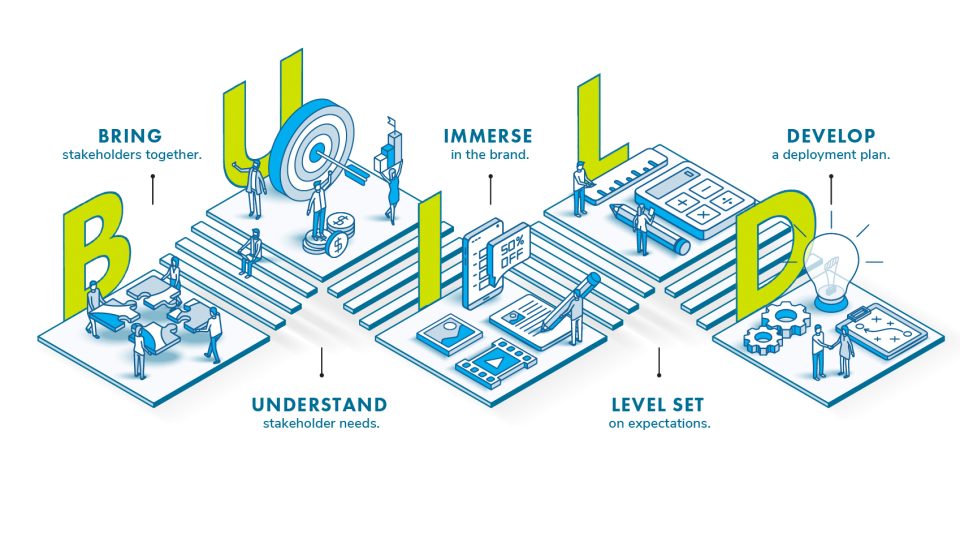
It’s not a product. It’s a method—developed from years of experience in physical
branding, environmental design, and networked digital systems. It helps
organizations focus on the consumer and the right long-term decisions, then
move forward with clarity in technologies and execution.
Let’s walk through it.
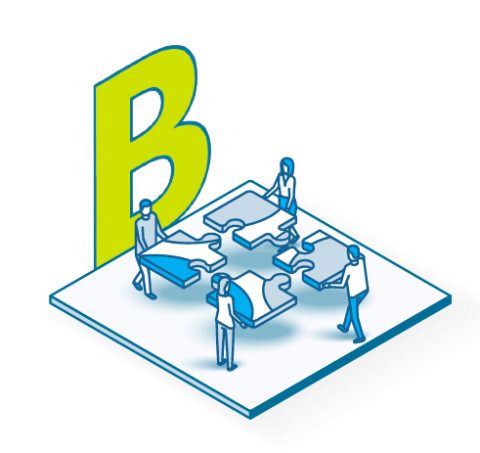
B – BRING stakeholders together
Digital signage sits at the intersection of several departments—marketing, retail, IT, operations, and facilities. Each group has different expectations and constraints. If they’re not aligned early, friction tends to show up later: unclear ownership, competing priorities, or misaligned outcomes.
We begin every engagement by identifying key stakeholders and creating space for shared understanding. What are we trying to solve? Who is the audience? How will success be measured?
Sometimes, the first win is just getting everyone in the same room with a common goal.
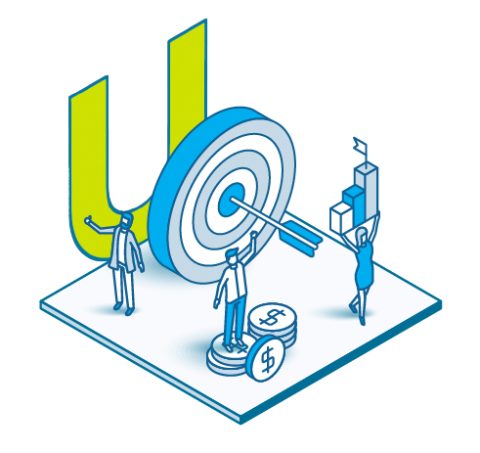
U – UNDERSTAND stakeholder needs
Once the right people are involved, we take the time to unpack their needs.
We’re not just gathering requirements—we’re building context:
-
- What messages are critical to communicate, and where?
- How do customers flow through the environment?
- What campaigns, launches, or promotions need signage support?
- What content types will the network support—branded, operational,
promotional, or third-party?
For some clients, this includes exploring retail media network potential:
Can signage generate revenue through brand partner placements or sponsored content? What guardrails are needed to ensure media doesn’t conflict with the in-store experience? What analytics or ad tech capabilities will be required?
These are strategic business model questions, not just technical ones—and they need to be addressed early to ensure the network is built with the right foundation.
I – IMMERSE in the brand, environment, and consumer journey
Every signage program should reflect the brand it represents—not just in visuals, but in tone, rhythm, placement, and purpose. This phase is about understanding how messaging and experience come together in physical space—and how that space connects to the broader omnichannel journey.
We look at:
-
- Brand guidelines and voice
- Physical layout, architecture, and traffic flow
- Existing signage and communication patterns
- Key customer behaviors and emotional moments
- Gaps between physical and digital messaging
This is also where we begin connecting in-store experience to out-of-store
influence. Is signage reinforcing promotions seen online? Does it help bridge the handoff from virtual experience to in-person interaction? Are loyalty, personalization, or social content being echoed across channels?
The goal is to ensure that digital signage doesn’t just function—it resonates. That it plays its role in the larger consumer journey, where message, medium, and moment align.
L – LEVEL SET on expectations, scope, and success metrics
Before any designs are finalized or equipment is ordered, we help teams level set.
This means:
-
- Aligning on desired outcomes—whether that’s improving dwell time, driving
offers, streamlining queue flow, or simply reinforcing brand identity. - Defining what support model will be needed post-launch (internal?
outsourced? hybrid?) - Agreeing on realistic timelines, service levels, and escalation paths
- Clarifying how success will be tracked and reported
- Aligning on desired outcomes—whether that’s improving dwell time, driving
This phase removes ambiguity—especially when there are multiple teams or external vendors involved. It’s how we prevent gaps and missed expectations later.
D – DEVELOP a deployment plan grounded in real-world complexity
This is the most technical phase of the process, and often the most daunting for clients. A good plan at this stage addresses more than just “what screen goes where.”
Here’s what gets worked through:
- CMS selection and configuration, based on content goals
- Hardware selection, matched to spatial and environmental needs
- Integration planning—POS, inventory, CRM, API, or AI
- Content workflow design, including approval paths and localization
- Site surveys, installation coordination, connectivity planning
- Monitoring, maintenance, support structures, SLAs
It’s complex—and that’s okay. At Cima, we’re structured to help clients navigate it with confidence, whether they need a fully managed service or support in targeted areas. Our goal is to create a program that is operationally sustainable, not just visually impressive.
The Outcome: Digital Signage That Delivers on Strategy
By moving through BUILD, clients avoid the common traps—disconnected
systems, misaligned teams, and underutilized assets. Instead, they launch
signage programs that are:
- Aligned to brand and space
- Tailored to their internal capabilities
- Designed for scale and evolution
- Built around consumer engagement—not just screen real estate
Most importantly, BUILD ensures that the signage network becomes a strategic
asset, not just another IT project.
A Final Note
Clients often ask us, “How long does BUILD take?” And the honest answer is—it
depends.
Some programs move through BUILD in a few weeks. Others may take longer
depending on the number of stakeholders, the complexity of the environment, and how much clarity already exists around goals and messaging.
What we can say with confidence is this: BUILD is more economical than some
common market direction for building successful digital signage programs.
Compared to other planning approaches, where self-evaluations of CMS,
innovative technology and trends, and current content library review, BUILD keeps teams aligned, reduces false starts, and ensures that every decision supports a shared strategy. The BUILD process is often quicker than traditional planning methods, but comes with a much higher degree of precision, accountability, consumer experience excellence, and long-term scalability – therefore success.
If your organization is investing in signage to improve experience, inform
consumers, or activate media value, it’s worth rethinking on how to do it right.
Ask: What are we trying to say? Who needs to say it? And what experience are we building?
Then BUILD your brand experience from there.